Children
Children’s rights, protection, education, health and nutrition.
Overview
Each cause points to specialized or broad-response actors. The English version gives priority to international, US and UK organizations, alongside essential United Nations and Red Cross/Red Crescent actors.
Short answer
A suitable cause combines a real need, an understandable response and an organization able to act. Health, water, food, shelter, protection and education are often connected. You can target one field or give flexibly so teams can address the most urgent gap.
Connected needs
Unsafe water can worsen illness, the loss of a home can interrupt education, and forced displacement may separate a family from income, care and familiar support.
The categories on this page are starting points, not closed boxes. Field teams often work together: health specialists coordinate with water and sanitation experts, while protection teams consider the particular risks faced by children, older people, persons with disabilities and isolated people.
Supporting a specific cause lets you focus on a need that matters to you. Supporting a broad-response organization may give it flexibility to address the most urgent gap. In both cases, look at how needs are assessed, which local partners are involved and how affected people can shape the response.
Children’s rights, protection, education, health and nutrition.
Care, medical emergencies, surgery, mental health and access to treatment.
Nutrition, food security, safe water, hygiene and sanitation.
Protection, asylum, migration, statelessness and support for displaced people.

Rapid response to conflicts, disasters, epidemics and climate crises.
Disability, rehabilitation, autonomy, dignity and fighting exclusion.
Poverty, shelter, social connection, inclusion and material support.

Schooling, training, access to information, culture, connectivity and knowledge.
Transport, energy, telecoms, supply chains and operational support.
Understand the response
Each field calls for specific skills and checks. These pointers help you read an organization’s programmes without reducing a crisis to one category.
What this cause covers. A response for children combines safety, family support, healthcare and continued learning. Separated, unaccompanied or violence-affected children need specialist referral.
What to check. Look for child-safeguarding rules, trained teams and a safe way to raise concerns. Activities with children should not depend on unsupervised visitors.
What this cause covers. Priorities range from urgent care to disease prevention, maternal health and psychosocial support. Quality also depends on medicines, referrals and continuity of care.
What to check. Check required qualifications, links with local services and how the organisation protects health data and refers complex cases.
What this cause covers. Food, nutrition, safe water, toilets and hygiene reinforce one another. Distributing goods without examining access, habits and local markets can miss actual needs.
What to check. See whether affected people help choose the response, water quality is monitored and infants and at-risk groups are considered.
What this cause covers. Displaced people may need safety, information about rights, shelter and access to services. Refugees and internally displaced people fall under different legal frameworks.
What to check. Check for understandable information, qualified support and safe feedback routes without requiring personal details to be published.
What this cause covers. After a shock, needs shift from rescue to essential services and recovery. Coordination helps avoid concentrating resources only in the most visible area.
What to check. Compare the appeal date, operational presence, local partners and updates. An old fundraiser may no longer match current priorities.
What this cause covers. A service is available in practice only when disabled, older or isolated people can reach it. Physical, language, financial and digital barriers all matter.
What to check. Look for accessible formats, consultation with affected people and complaint routes that do not rely on one channel.
What this cause covers. Shelter and poverty support combine safe housing, rights, income, healthcare and social work. Immediate relief does not replace longer-term stability.
What to check. Check household suitability, site safety, confidentiality and links to public services or local associations.
What this cause covers. During a crisis, learning also offers routine, protective relationships and access to other services. Spaces must be safe, inclusive and suitable for teachers and learners.
What to check. Look at access for excluded children, safety, teacher support and continuity with the local education system.
What this cause covers. Transport, storage, energy and communications make other responses possible. Bottlenecks can delay aid even when donated goods are available.
What to check. Check that goods meet a specific request, delivery is coordinated and local capacity and suppliers are considered.
In the field
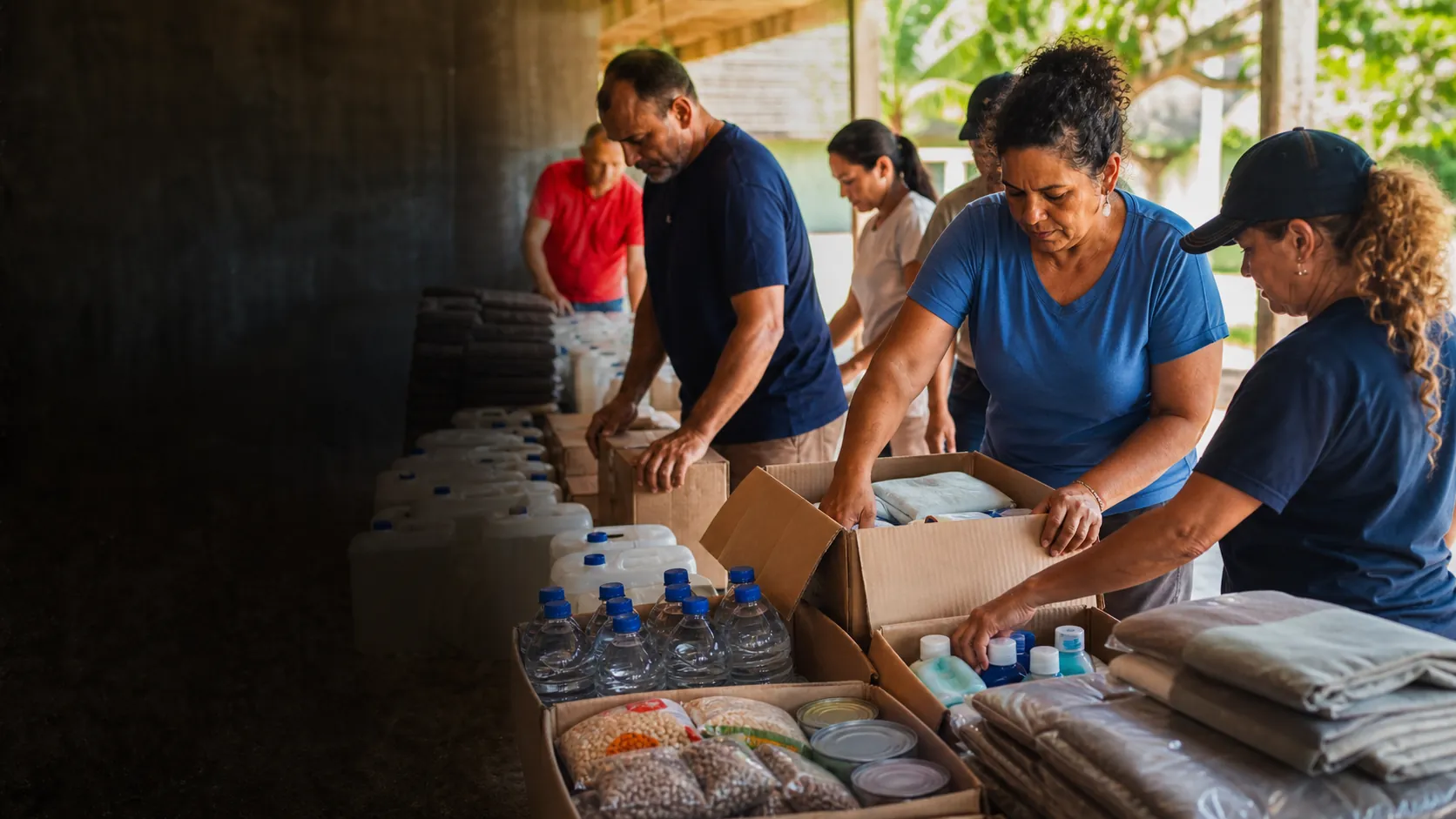
A few visual reference points to understand priorities: food assistance, shelter, logistics, healthcare, water, protection and support for affected communities.

Distribution, reception, guidance and first support are immediate needs when families lack food, water or protection.

Children are especially exposed during displacement: shelter, hygiene, school access, healthcare and protection must be addressed together.

Logistics makes aid possible: transport, storage, kits, local coordination and safe access shape the speed of response.

Food security, nutrition, water access and income support are linked: emergency response and recovery often need to move together.

Local consultations, essential medicines and referral pathways help maintain continuity of care in fragile settings.

Access to safe water, hygiene and sanitation reduces health risks and strengthens communities over time.

Even during a crisis, safe learning spaces provide children with continuity, routine and protection.

Repairing homes and strengthening infrastructure with communities helps reduce risk during future shocks.

Cash or digital assistance can give households the freedom to prioritize their own essential needs.

Useful humanitarian action is designed with affected people so services are genuinely accessible to everyone.

Supporting local activities, skills and resources helps families rebuild income and lasting autonomy.

Listening, information and social connection can help people and communities navigate a crisis with greater stability.

Safe spaces, clear information and confidential guidance help people understand their rights and options.

Preparing for climate hazards with residents helps protect homes, services and livelihoods earlier.

Safe shelter protects privacy, health and a family’s ability to recover after displacement or disaster.

Locally prepared balanced meals can support nutrition, social connection and responses suited to food habits.

Reliable power helps health services preserve essentials, provide light for care and remain open longer.

Coordinating local actors, information and routes helps target aid better and prevent gaps.

The last journey is often decisive: local networks bring supplies closer to people and hard-to-reach places.

Maintaining regular learning helps children keep routines, relationships and prospects for the future.

Simple facilities maintained with residents make everyday hygiene easier and reduce disease risk.

Cooperatives and collective activities can strengthen income, mutual support and decision-making within communities.